Maria Viteri
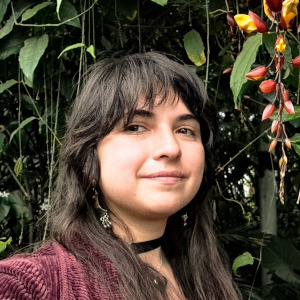
Randall Preserve Ecologist
Terrestrial
maria.viteri@TNC.ORG
In The Nature Conservancy’s California Chapter, Maria is the Ecologist for the Frank and Joan Randall Preserve in the Tehachapi Mountains. Maria holds a Ph.D. in Ecology and Evolutionary Biology from Stanford University where she studied how land use change and other anthropogenic impacts have affected terrestrial animal communities over space and time. Her background in vertebrate paleontology allows her to leverage historical and fossil data to understand the scale and magnitude of change, establishing baselines for conservation. She is particularly interested in investigating and mitigating human impacts on California’s native mammals.
Select products
2026 | Terrestrial | Planning | Technology | Science | Publications & Reports
Integrating multi-decadal satellite imagery and species distribution models for conservation planning in oak woodlands
M. Brooke Rose, Janet Franklin, H. Scott Butterfield, Paige Rohwer, Amelie Beck, Maria C. Viteri, Jeanette K. Howard, Zachary Principe, Andrea Craig, Daniel Sousa
Oaks are a foundational species, including across TNC preserves like Dye Creek and Randall. They support thousands of organisms. Drought, catastrophic wildfire, land conversion, and climate change are…
2022 | Terrestrial | Science | Publications & Reports
Spatiotemporal impacts of the Anthropocene on small mammal communities, and the role of small biological preserves in maintaining biodiversity
Maria C. Viteri, Elizabeth A. Hadly
This paper investigates the ability of small protected spaces to conserve small mammal diversity in urban areas. The authors identified small mammal bones from both modern owl pellets and…
2021 | Terrestrial | Science | Publications & Reports
Assessing the reliability of raptor pellets in recording local small mammal diversity
Maria C Viteri, Mary Allison Stegner, Elizabeth A. Hadly
Biodiversity monitoring is a core part of conservation practice, however all sampling methods include biases. In particular, small mammal live-trapping, the field standard, produces highly skewed…